Why Is My Dog Reactive on Lead? (And What Actually Works)
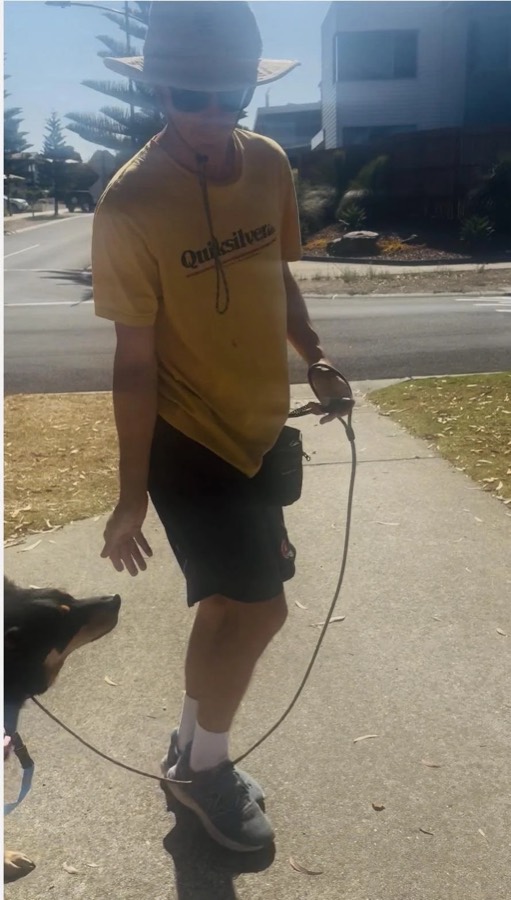
If your dog turns into a barking, lunging mess the moment another dog appears on your walk, you are not alone and your dog is not broken. Leash reactivity is one of the most common behaviour problems I see across Torquay, Geelong, the Bellarine and the Surf Coast. It is also one of the most fixable, once you understand what is actually driving it.
What is leash reactivity?
Leash reactivity is an over-the-top response to something in the environment while your dog is on lead. Common triggers are other dogs, unfamiliar people, bikes, skateboards, joggers and cars. The reaction usually looks like barking, lunging, growling, spinning or pulling hard toward or away from the trigger.
Here is the important part. Reactivity is not the same as aggression. Most reactive dogs are perfectly friendly off lead or at home. The behaviour is a symptom of a big emotion, and the lead is often what tips that emotion over the edge.
Why do dogs react on lead but not off it?
Dogs have two natural options when something worries them: move away or investigate on their own terms. A lead removes both. Your dog cannot create distance and cannot approach the way they would like, so the pressure builds and comes out as barking and lunging. Trainers call this the fight response taking over when flight is not available.
The most common underlying causes are:
- Fear. The dog wants the trigger to go away, and barking often works, because the other dog or person keeps walking. The behaviour gets rehearsed and reinforced.
- Frustration. Some dogs desperately want to say hello and cannot. That frustration boils over into noise and lunging that looks aggressive but is not.
- Under-socialisation. Dogs who missed calm, positive exposure to other dogs and people as pups can find the world overwhelming as adults.
- Past experiences. One bad rush from an off-lead dog can be enough to convince a sensitive dog that other dogs on walks mean trouble.
Pain and discomfort can also play a role, so if reactivity appears suddenly or is getting worse, a vet check is always a smart first step.
Why do corrections and punishment make reactivity worse?
It is tempting to jerk the lead, use a correction collar or growl "no" at your dog. It might interrupt one outburst, but it teaches exactly the wrong lesson. Your dog was already worried or frustrated about the trigger. Now the trigger also predicts something unpleasant from you. You have confirmed their fear: other dogs appearing means bad things happen.
Punishment can also suppress the warning signs, the growl or the stiff body, without changing the emotion underneath. A dog who has learned not to warn is a less predictable dog, not a calmer one. This is why modern, science-based trainers do not use corrections for reactivity, and it is a core principle of the positive, science-based approach I use with every dog.
What actually works for leash reactivity?
Two things change reactive behaviour reliably: distance and counter-conditioning.
Distance work means finding the point where your dog notices the trigger but can still think, eat and respond to you. That is called being under threshold. All useful learning happens there. If your dog is already barking and lunging, they are over threshold and cannot learn anything except more rehearsal of the behaviour.
Counter-conditioning means changing the emotional response. At a comfortable distance, the moment your dog notices the trigger, something brilliant happens, usually high-value food. Repeated well, the trigger stops predicting threat and starts predicting good things. Over time the dog who spotted another dog and exploded becomes the dog who spots another dog and looks at you.
This is slow, honest work, but it changes the dog rather than just suppressing the symptoms. A reliable recall built through recall training also helps enormously, because being able to call your dog away from trouble prevents the bad experiences that feed reactivity.
What should owners do and not do?
Do: give your dog space from triggers, cross the road early, use quiet times and quiet places for walks, reward calm glances at triggers, use a well-fitted harness, and keep sessions short.
Don't: punish barking or growling, force your dog to "face their fears" up close, let strangers or strange dogs approach a worried dog, or flood busy spots like the main beach car park at peak time hoping they will get used to it.
And please drop the embarrassment. Every trainer worth their salt knows a reactive dog is a stressed dog, not a bad dog, and you are not a bad owner for having one.
When should you get professional help?
If reactivity is escalating, if your dog has bitten or you are worried they might, or if walks have become something you dread, get qualified, positive help early. As a Karen Pryor Academy Certified Training Partner who has completed Michael Shikashio's Aggression in Dogs Master Course, this is exactly the work I do every week. Private behaviour training runs at your home or on-location, exactly where the behaviour happens, whether that is your street in Geelong or the river path in Torquay. For dogs who are not reactive but need better manners and focus around distractions, group classes can be a great fit down the track.
If your walks feel like a battle, let's fix that. I'm Cam, The Surf Coast Dog Trainer, rated 5.0 from 26 Google reviews. Call 0402 225 860 or get in touch for a free chat about your dog.
Frequently asked questions
Is my leash-reactive dog aggressive?
Usually not. Most leash reactivity is driven by fear or frustration, not a desire to harm. Many reactive dogs are friendly off lead or at home. That said, if your dog has bitten or you are worried about safety, work with a qualified positive trainer rather than testing it yourself.
Will my dog grow out of leash reactivity?
It is unlikely. Reactivity tends to get worse with rehearsal, because barking and lunging keeps working from the dog's point of view. The earlier you start managing distance and counter-conditioning, the faster it improves.
Should I use a correction collar to stop the lunging?
No. Corrections can suppress the outburst in the moment but they add pain or startle to a situation your dog already finds stressful, which typically makes the underlying emotion and the behaviour worse over time. Science-based training changes how your dog feels instead.
Can a reactive dog join group classes?
Not straight away. A class full of dogs usually puts a reactive dog well over threshold, so private behaviour training in the real environment is the right starting point. Once your dog is coping well around other dogs, group classes can become an option.
How long does it take to fix leash reactivity?
It varies with the dog, the history and how often you practise. Many owners see meaningful change within weeks of consistent under-threshold work, but there is no honest fixed timeline. A tailored plan from a qualified trainer will give you a realistic picture for your dog.