How to Teach Your Dog a Reliable Recall (Why Yelling Doesn't Work)
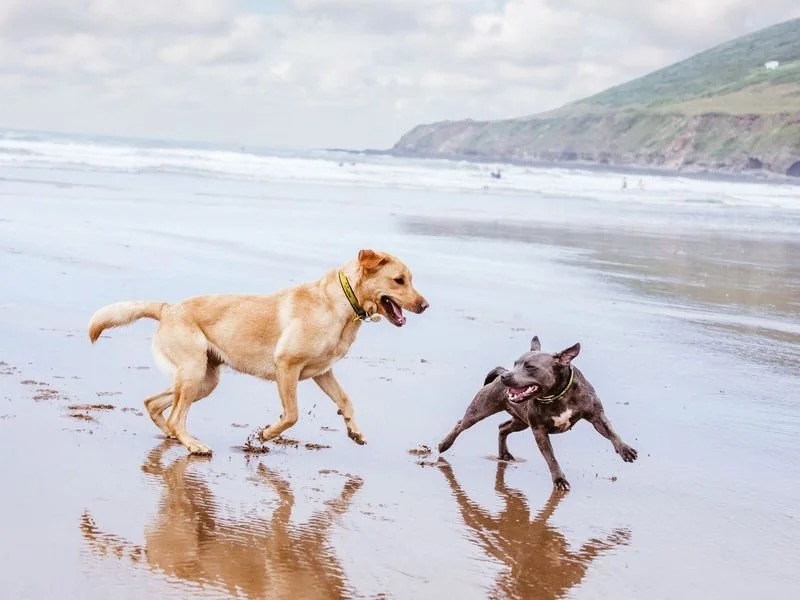
Every dog owner on the Surf Coast knows the moment. Your dog is halfway down the beach chasing a seagull, you call, and they glance at you with a look that says "maybe later". It feels personal. It is not. Your dog is simply doing the maths, and right now the seagull pays better than you do.
The good news is that recall is not a personality trait. It is a trained behaviour, and any dog can learn it when the training follows how dogs actually learn. Here is how it works.
Why does my dog only come back when they want to?
Dogs repeat behaviours that pay off. If coming back to you usually means the lead goes on and the fun ends, while ignoring you means five more minutes of sniffing, swimming and chasing, your dog has learned exactly what you taught them. Not coming back is the winning move.
There is no defiance in this. A dog at an off-lead park is surrounded by smells, other dogs and space to run. Your voice is competing with all of it. Until you have deliberately built a history where returning to you is the best thing on offer, the environment wins by default.
Why doesn't yelling work?
Yelling fails for two reasons. First, an angry voice is unpleasant, and dogs move away from unpleasant things. You are literally making yourself less worth coming back to at the exact moment you need the opposite.
Second, and this is the one that catches good owners out, if your dog finally trots back and gets growled at for taking so long, they learn that coming back ends badly. Next time they will take longer, or not come at all. The golden rule of recall is simple. No matter how long it took, when your dog arrives, they get paid. You can be frustrated on the inside. On the outside, you are the best thing at the beach.
What actually makes a recall reliable?
Reliable recall is built on one idea from learning science. The behaviour that gets reinforced gets repeated. That means your job is to make returning to you genuinely valuable, hundreds of times, before you ever need it around a serious distraction.
In practice that looks like this:
- Pay well. Use food your dog actually loves, not dry biscuits. For some dogs a tug toy or a flying piece of chicken beats everything.
- Start easy. Begin in your lounge room or backyard where you are the most interesting thing around. Nail it there before you go anywhere harder.
- Add difficulty gradually. Increase distance first, then mild distractions, then bigger ones. The quiet end of the river mouth before the busy dog beach.
- Keep the cue clean. Only call when you would bet money your dog will come. Every ignored cue teaches your dog the word is optional.
- Do not always end the fun. Call your dog, reward, then release them back to play. If "come" sometimes means "more fun", it stops predicting the end of the walk.
This is the same positive, science-based approach we use in all our recall training, and it is why it holds up in the real world, not just the backyard.
What are the most common recall mistakes?
After working with dogs across Geelong, the Bellarine and the Surf Coast, the same handful of mistakes come up again and again:
- Repeating the cue. "Come. Come! COME!" teaches your dog that the first two are free.
- Only calling for bad news. If recall always means bath time, nail clips or leaving the Ocean Grove dog beach, your dog learns to dread it.
- Skipping steps. Going from the backyard straight to an off-lead park full of dogs is like sitting an exam you never studied for.
- Punishing the return. Any telling off, rough handling or cold shoulder when your dog arrives poisons the whole behaviour.
- Being boring. Standing still and muttering the cue once does not compete with a dead fish on the sand. Move, be exciting, make coming to you an event.
If you have a young dog, you have a head start. Building recall into early learning through puppy training is far easier than fixing a rehearsed habit of ignoring you later on.
How does a small group recall course speed things up?
You can absolutely train recall on your own, but structure and the right distractions accelerate it enormously. That is exactly what our Advanced Recall Courses are built for. Groups are capped at five dogs, so your dog trains around real, controlled distractions, other dogs, without the chaos of a packed park. You get three weekly 60 minute sessions with a real-world focus, held at Surf Coast Rural in Torquay.
Training in a small group also fixes the biggest gap in DIY recall work. At home your dog has no reason to leave you. In a course, the distractions are built in and increased deliberately, which is precisely how a recall becomes reliable. It is the same reason our group classes work so well for general manners.
All of it is positive and science based. Cam is a Karen Pryor Academy Certified Training Partner and has completed Michael Shikashio's Aggression in Dogs Master Course, so the methods are grounded in how dogs actually learn, not in outdated ideas about dominance.
Ready for a dog that comes when called?
A reliable recall is freedom. Off-lead beach runs, relaxed walks and a dog you can trust when it matters. If you would like help getting there, get in touch for a free chat or ask about the next Advanced Recall Course. Bookings are essential, groups fill fast, and you can call Cam on 0402 225 860.
Frequently asked questions
How long does it take to teach a reliable recall?
It depends on your dog's age, history and the distractions you need it to hold up against. Most dogs make obvious progress within a few weeks of consistent, well-paid practice. Our Advanced Recall Course runs over three weekly sessions and gives you the structure to keep building from there.
Should I punish my dog for not coming back?
No, never. If your dog is punished when they finally return, they learn that coming back ends badly, which makes the recall worse. Always reward your dog for arriving, no matter how long it took, and go back a step in training so success is easier next time.
My dog ignores me at the beach but listens at home. Why?
Distractions change everything. At home you are the most interesting thing around, but at the beach you are competing with smells, birds, waves and other dogs. Recall has to be trained gradually around increasing distractions before it will hold up in exciting places.
What treats work best for recall training?
Use something your dog genuinely loves, like cooked chicken, cheese or a favourite toy, and save it just for recall. The reward has to beat the distraction, so everyday dry biscuits usually will not cut it at an off-lead park.
Where are the recall courses held?
Our Advanced Recall Courses run at Surf Coast Rural in Torquay, with small groups capped at five dogs and a real-world focus. We work with dogs from Torquay, Geelong, the Bellarine and across the Surf Coast. Bookings are essential, so get in touch to reserve a spot.