Dog-Friendly Beaches on the Surf Coast: A Local Trainer's Guide
I train dogs on these beaches most weeks of the year, and I can tell you the difference between a stressful beach trip and a brilliant one is rarely the beach itself. It is the preparation. The Surf Coast and Bellarine are spoilt for dog-friendly sand, from Torquay and Jan Juc down to Anglesea, and across to Ocean Grove on the Bellarine side. This guide covers where locals take their dogs and, more importantly, the training skills that make each spot enjoyable.
One thing first. I am deliberately not listing specific leash zones or time restrictions here, because councils review them and they do change. Before every visit, check the current signage at the beach entrance and the relevant council website: Surf Coast Shire for Torquay, Jan Juc and Anglesea, and City of Greater Geelong or Barwon Coast for the Ocean Grove end. Signage on the day always wins.
Which Surf Coast beaches are good for dogs?
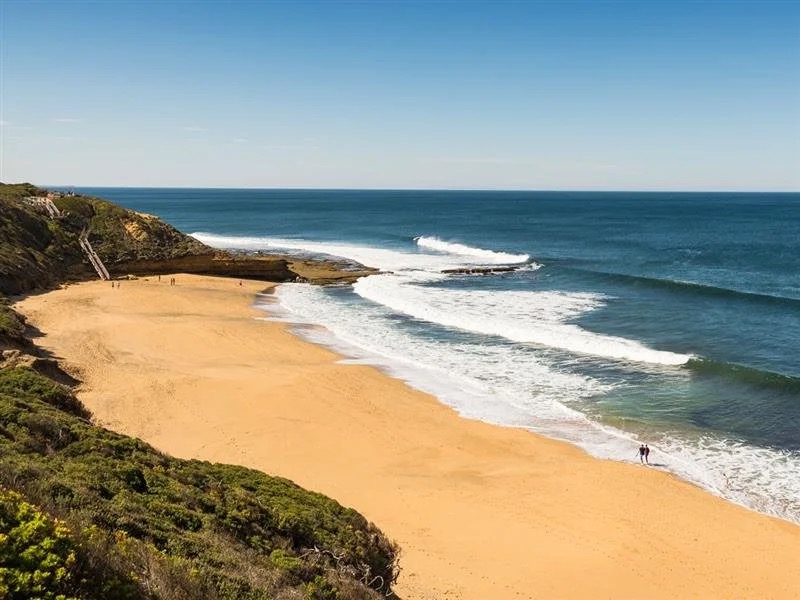
Around Torquay, the stretches away from the main surf breaks are popular with local dog owners, especially early in the morning when the sand is quiet and the distractions are manageable. Jan Juc offers a wilder feel with more space to move, which suits dogs who need a good gallop, though the steps and cliffs mean you want your dog close and responsive near the access points. Anglesea is a favourite of mine for river and beach in one trip, and the calmer water near the river mouth is ideal for dogs still building confidence in the sea. Over on the Bellarine, Ocean Grove has long, flat sand that is perfect for distance recall practice.
Each of these places has designated dog areas that shift between on-lead and off-lead depending on the zone and time of year. Read the signs, and if you are ever unsure, keep the lead on. A long line gives your dog plenty of freedom while you stay within the rules.
How do I get a reliable recall at the beach?
The beach is the hardest place your dog will ever be asked to come back. Birds, other dogs, dead fish, kids with chips. If your recall only works in the backyard, it does not exist yet at the beach.
Start by paying generously for check-ins. Every time your dog glances at you on the sand, mark it and reward it. Then practise short, easy recalls when your dog is not busy, so the habit is strong before you ever need it around a real distraction. Use a long line until your dog is coming back promptly nine times out of ten. And never punish a slow recall. If coming back ends the fun or earns a growl from you, your dog learns that returning is a bad deal.
This is exactly what we build in my Advanced Recall Courses. They run in small groups with real-world distractions, because a recall trained in a quiet hall falls apart the moment a seagull lifts off.
How should my dog greet other dogs on the beach?
Off-lead areas are social places, and not every dog wants a full-speed greeting. Teach your dog that seeing another dog is a cue to check in with you, not to launch. Practise at a distance where your dog can still think, reward calm looking, and close the gap gradually over multiple sessions.
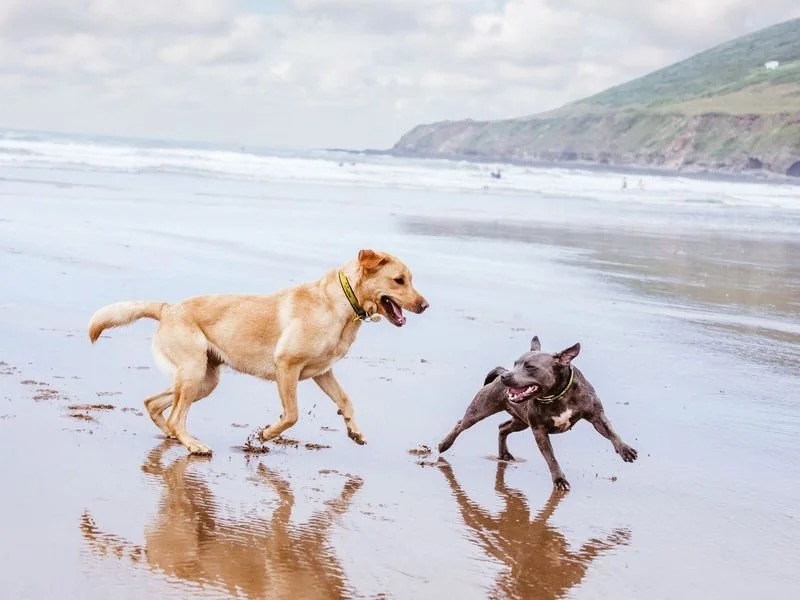
Keep greetings short. Three seconds of sniffing, then call your dog away and reward. If either dog looks stiff, hides behind legs or tries to leave, help them out and move on. Polite beach dogs are made, not born, and group settings with a trainer guiding things are the safest way to build those skills. That is a big part of what happens in my Group Drop-In Classes.
What about lead manners on shared paths?
Most beach trips start and finish on a shared path with joggers, prams and bikes. A dog that drags you to the sand is rehearsing pulling every single visit. Slow the arrival down. Reward a loose lead for a few steps at a time, stop moving when the lead tightens, and let calm walking be the thing that gets your dog to the beach. The beach itself becomes the reward, which is far more powerful than anything in your treat pouch.
How do I help my dog settle after the beach?
A wired, wet, sandy dog in the back of the car is not a happy ending. After a big session, give your dog a few minutes of sniffing and slow walking before you leave, offer water, and then reward calm behaviour on a mat or in the boot area. Dogs that learn to switch off after excitement are easier to live with everywhere, not just at the coast.
Ready to make beach days easy?
I am Cam Fennell, a Karen Pryor Academy Certified Training Partner based in Torquay, and I have also completed Michael Shikashio's Aggression in Dogs Master Course. Everything I teach is positive and science based, and it is built for the real beaches, paths and car parks of Geelong, the Bellarine and the Surf Coast. If you want a recall you can trust and a dog who is a pleasure at the beach, get in touch for a free chat or call 0402 225 860. I would love to help.
Frequently asked questions
Are dogs allowed off-lead on Surf Coast beaches?
Many beaches around Torquay, Jan Juc, Anglesea and Ocean Grove have designated off-lead areas, but the zones and times change with council reviews and seasons. Always check the signage at the beach entrance and the current rules on the Surf Coast Shire, City of Greater Geelong or Barwon Coast websites before unclipping the lead.
When is the best time to take my dog to the beach for training?
Early mornings are usually quietest, which makes them ideal for training. Fewer dogs and people means fewer distractions, so your dog can succeed at recalls and calm greetings before you gradually work up to busier times.
My dog's recall is unreliable. Should I still let them off-lead?
Not yet. Use a long line in permitted areas so your dog gets freedom while you stay in control, and build the recall properly first. A structured program like an Advanced Recall Course, trained in small groups around real-world distractions, is the fastest way to earn genuine off-lead reliability.
How do I stop my dog rushing up to every dog on the beach?
Teach your dog that spotting another dog is a cue to check in with you. Reward calm attention at a distance, keep any greetings to a few seconds before calling away, and practise in controlled group settings. Rushing is a rehearsed habit, and calm approaches can be trained the same way.
Does Cam offer training near the Surf Coast beaches?
Yes. The Surf Coast Dog Trainer is based in Torquay and serves Geelong, the Bellarine and the Surf Coast, running Advanced Recall Courses and Group Drop-In Classes with a positive, science-based approach. Call 0402 225 860 or use the contact page for a free chat.